
Modernizing the Illinois Defense
What Illinois experimented with defensively in the Illinois State exhibition game

The Illinois Defense Had Grown Stale
The Illinois defense had gotten stale. It felt like Lovie Smith’s Cover-2 at Illinois, predictable and easy to gameplan against. Opponents knew what they’d face. Under Brad Underwood, Illinois’ defensive identity became just as rigid. The big would drop into the paint to protect the rim. The guard would chase the ball handler over the screen, forcing the drive inside the arc. Off-ball defenders stayed glued to their man, never helping on penetration.
It didn’t matter whether the off-ball shooter was elite or below average, this system was built to suppress threes. The logic was sound: most threes come from paint touches that collapse the defense and trigger rotations. By staying home, Illinois limited those opportunities. But that discipline came with a cost. When the guard chased over and the big dropped back, it created a 2-on-1 between the ball handler and the rolling screener vs the drop big. Not helping meant Illinois routinely gave up too many easy baskets at the rim.
The scheme worked fine against lesser teams. Against top competition, it was exposed. Because Illinois rarely changed its coverage, experienced guards quickly recognized the look and attacked their preferred spots. Empty-side pick-and-rolls became an automatic advantage. Movement shooters punished drop coverage, using high screens to flow into rhythm pull-up threes with no big at the level.
It was a defense designed not to lose, not one built to win. Illinois applied little pressure and ranked last in the Big Ten in turnover rate last season, a predictable outcome for a conservative system. Turnovers create transition offense, and Illinois generated few. Over the past three seasons, their defense in conference play has hovered around average or slightly below.
Just like in football, defenses need to change the picture. You have to disguise coverages, bring pressure, and keep the offense guessing. Illinois hadn’t done that. A program with championship aspirations can’t keep rolling out the same blueprint year after year.
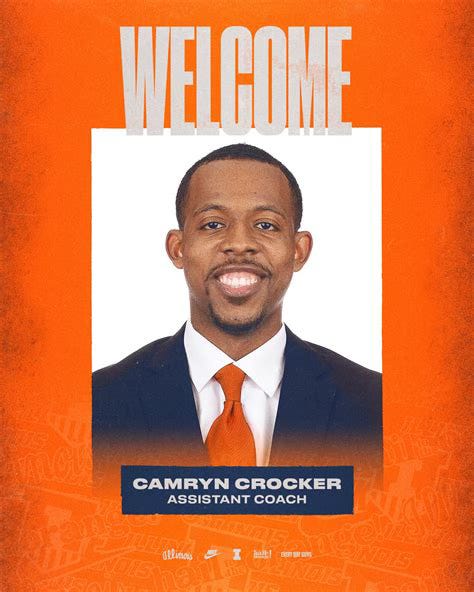
So Underwood made a change. He hired Camryn Crocker as an assistant coach this offseason. He’s a young, up-and-coming voice from outside Underwood’s inner circle. It was a smart move. Fresh perspective breeds innovation, and Illinois’ defense needed both.
So Underwood made a change. He hired Camryn Crocker, a young assistant with no prior ties to the program. It was a smart move—an intentional break from the echo chamber. Fresh voices bring new ideas, and Illinois’ defense needed both.
In conference play last season, opponents shot 63.9% at the rim against Illinois—the equivalent of allowing 42.6% from three. By comparison, opponents actually shot just 35.6% from deep. The math makes the problem clear: Illinois’ defense overprotected the arc and underprotected the paint.
To reach the next level, Illinois must get more aggressive with its help defense, even if that means conceding a few more threes. The program swung too far toward a “no-threes” identity, and this season appears to be a course correction.
With that in mind, let’s look at a few wrinkles Illinois showed in its exhibition against Illinois State. Concepts we didn’t see a year ago.
Switch Everything
While the above clip ended in a made basket, the ball never touched the paint. Illinois forced a contested two, which is the type of shot they’ll live with. The ball handler never got downhill, and nothing came easy on the possession.
Switch defenses can be attacked, so this isn’t to suggest Illinois should use it every time. I’m still evaluating how well this group can execute mentally and physically with the different coverages. The goal here is simply to highlight the new defensive looks we saw in the exhibition.
Zone
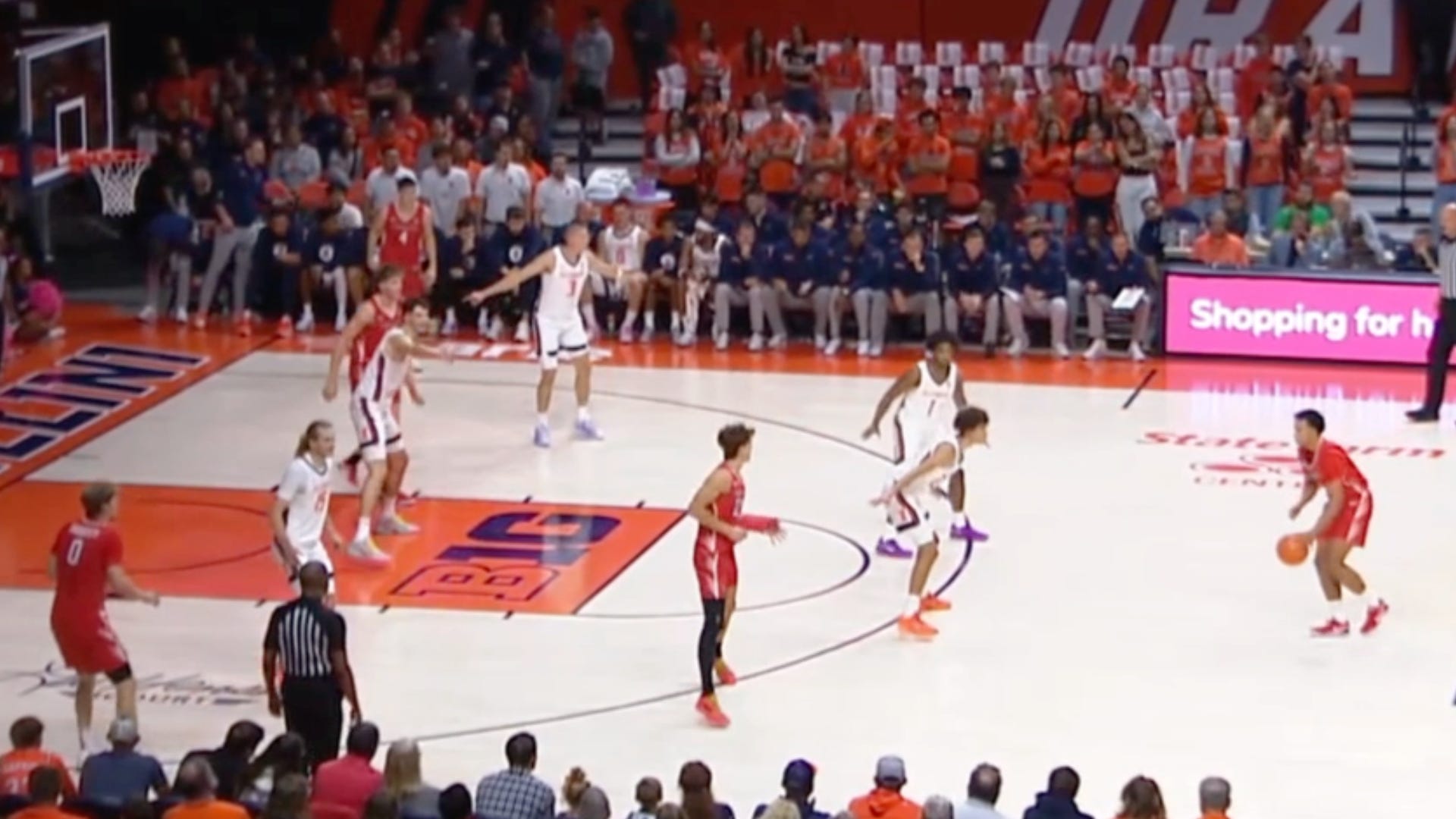
For the rest of this post, I used still images to keep things simple. We actually saw Illinois run some 2-3 zone. Zone defense has even become more common in the NBA, whether it’s a 2-3, 3-2, or box-and-one. Even most man coverages now have zone-based principles because of help responsibilities. You guard your man, but you’re also responsible for the area of the floor you occupy.
I doubt Illinois will rely heavily on zone, but it can be a useful changeup. When an offense gets comfortable or starts spamming a certain action, switching to zone for a few possessions can disrupt rhythm and force the opponent to think and adjust on the fly.
Help Off Corner Shooters
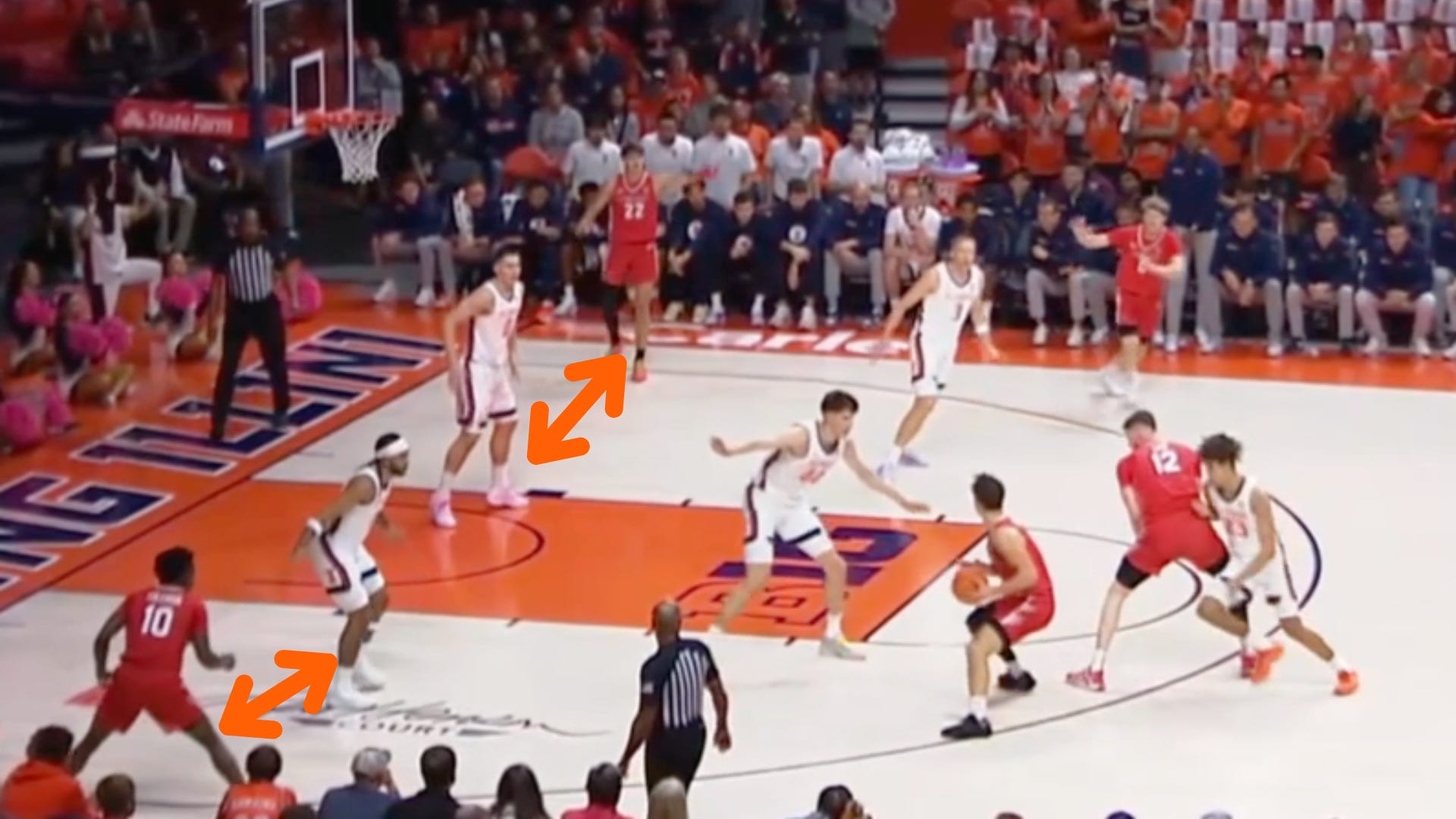
Last season, Illinois defenders stayed glued to corner shooters, which opened driving lanes and gave opponents a clear path to the rim. In this image, Illinois helps off the corners to clog the lane and shrink driving gaps. Even if the corner defenders don’t fully commit to a double team, they can still jab in to disrupt the drive, force a pickup, or even generate a turnover, while remaining close enough to recover to the shooter.
Notice Boswell on the strong side (near side) positioned tighter to his man than Mirkovic on the weak side (far side). This reflects the zone-based principles embedded in modern man defense. The pass to the far side takes longer to reach, allowing Mirkovic to sag and still recover in time. Boswell, being closer to the ball, has less recovery time, so he stays tighter to his shooter. Both defenders are reading distance and timing, helping just enough to limit space on the drive while still being able to contest the kick-out three. This approach takes away more driving space than what we saw from last year’s team.
Of course it comes with risk. Get too aggressive in forcing the ball handler to pick up their dribble. Stray too far one pass away and it’s an easy three for the opposing offense.
Hard Hedge
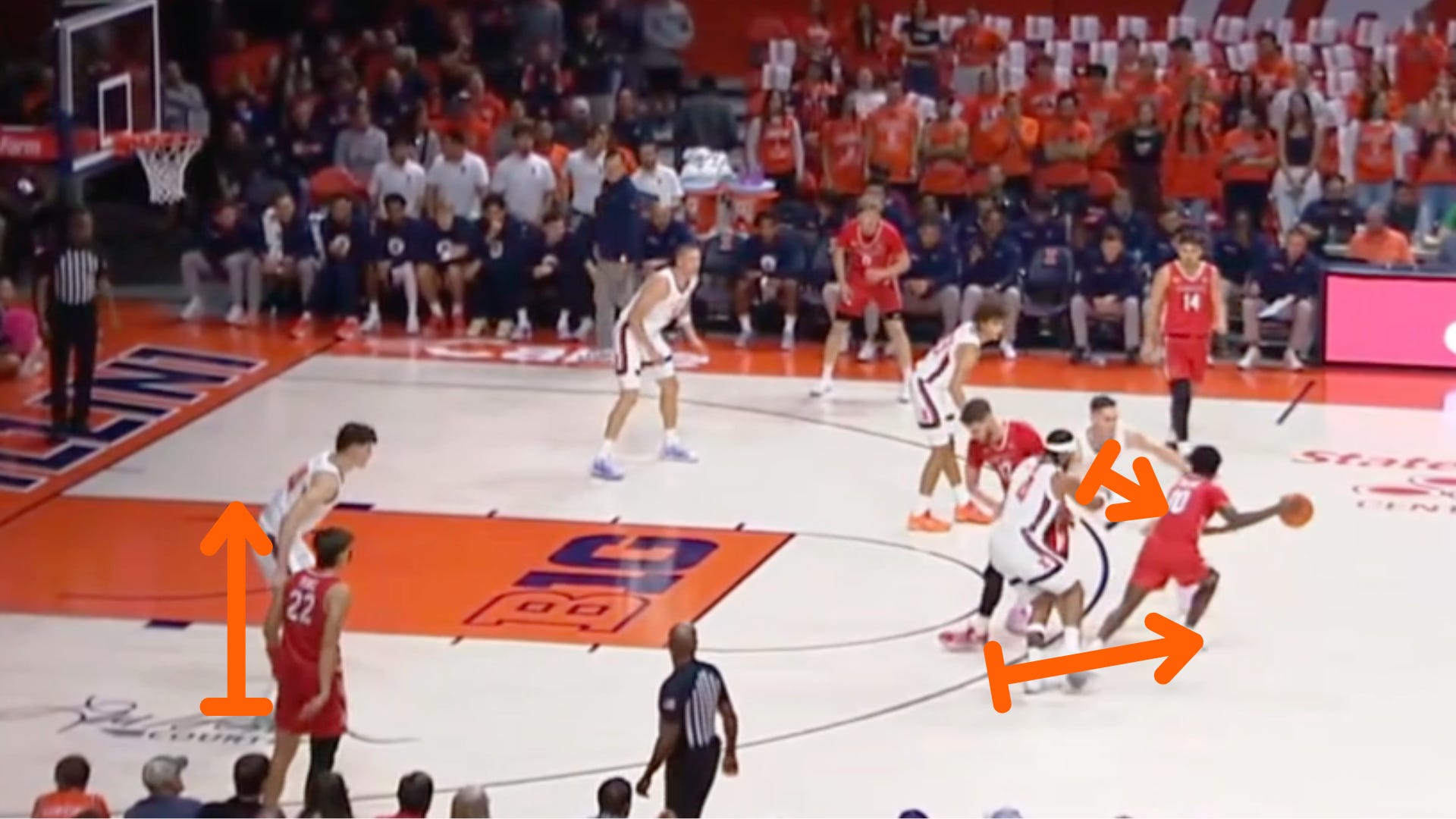
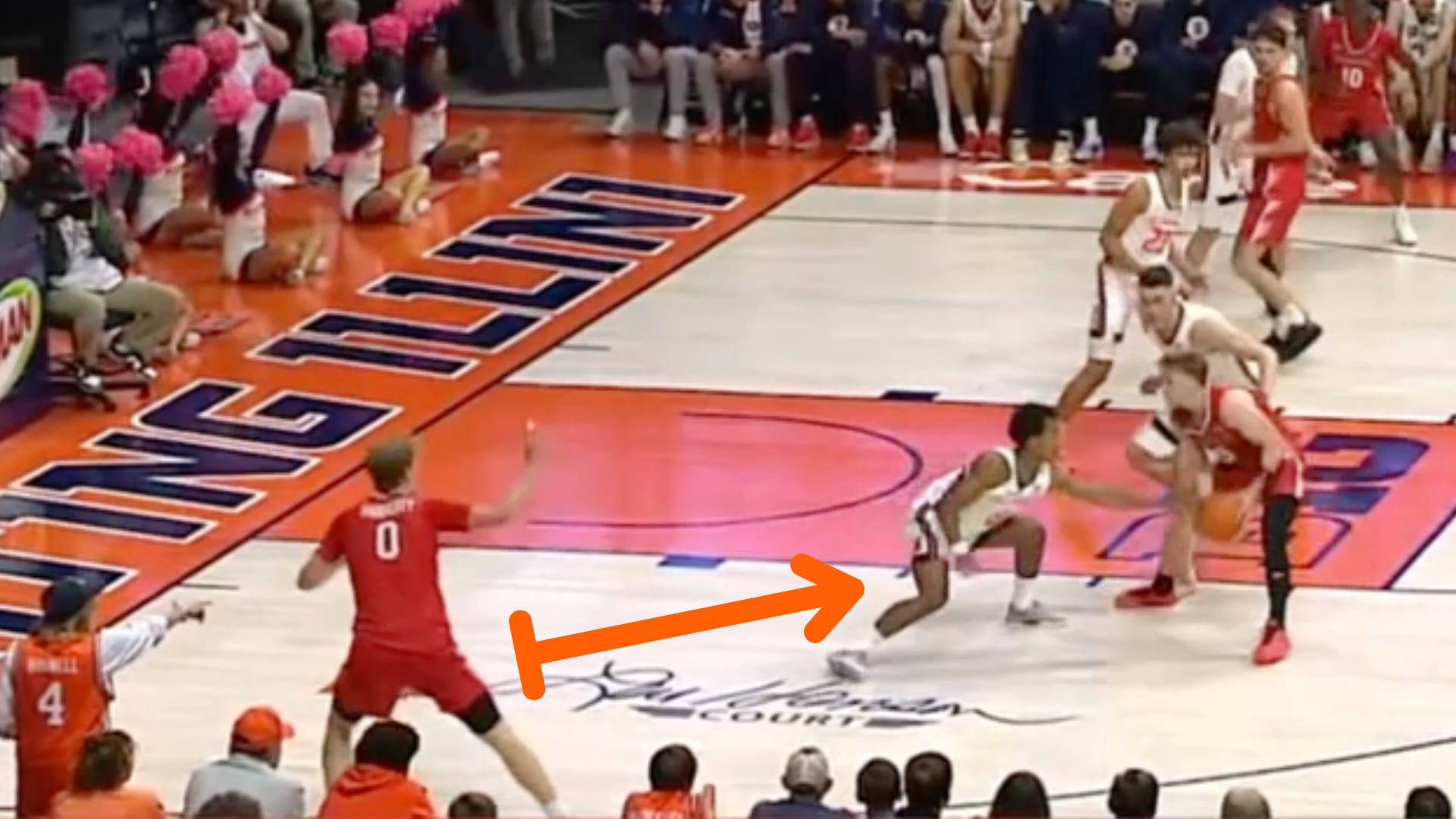
This play actually resulted in a turnover, as Illinois State felt pressure to hit the roller and Wagler tipped the entry pass. On this possession, Boswell fights over the screen while Mirkovic jumps out to temporarily trap the ball handler, preventing him from getting downhill.
This coverage mirrors what gave Kasparas Jakucionis trouble last season, when defenses sent two to the ball and forced him to retreat. It’s the basketball version of a quarterback blitz designed to disrupt rhythm and timing. Instead of the ball handler turning the corner into open space, the trap immediately forces the offense to have to counter. And even if Illinois State could have gotten the ball to the roller, Big Z was already rotating down from the near-side corner to protect the rim.
Packing The Paint
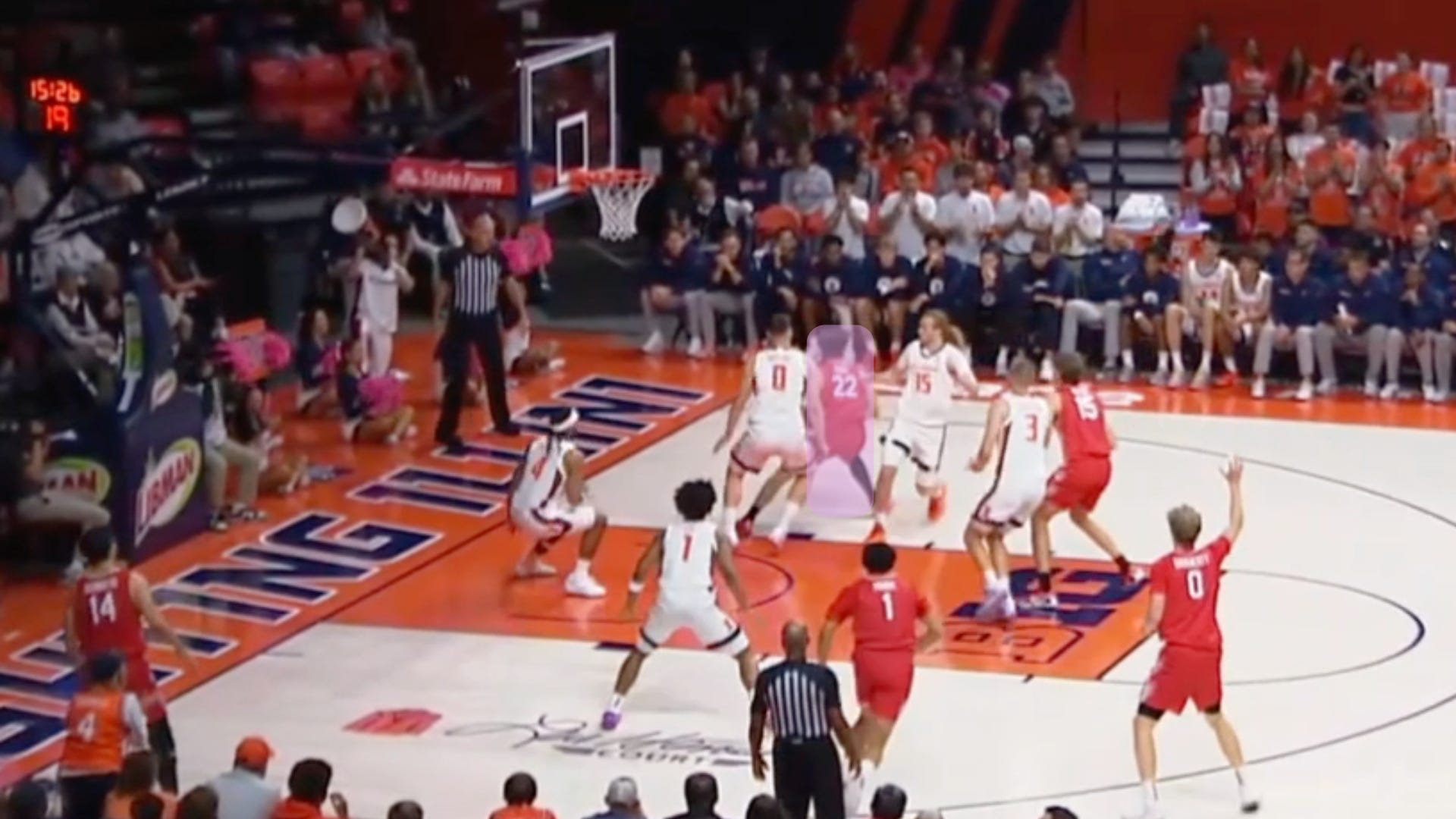
We would have never seen this last season. Mirkovic steps over to cut off the dribble drive. Humrichous drops down to help the helper, and Boswell rotates from the weak-side corner to provide even more help at the rim. Brandon Lee is left zoning between the three weak-side shooters, ready to close out on whichever one receives the pass first.
Full Court Trap
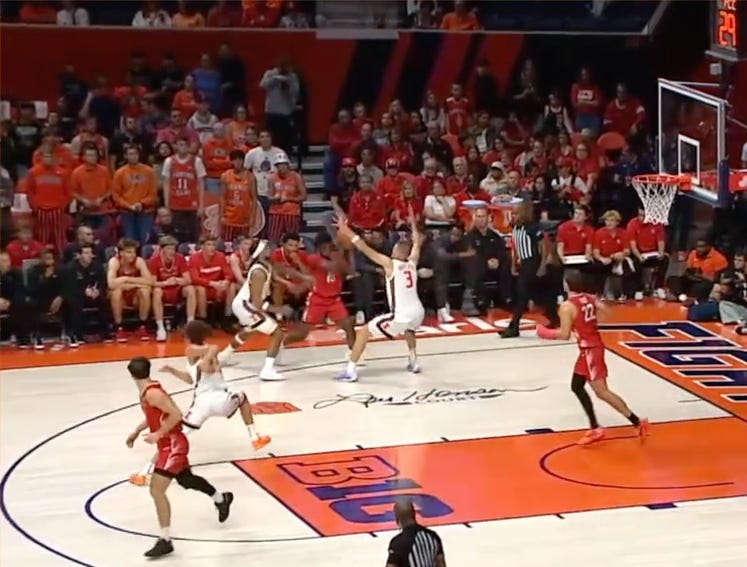
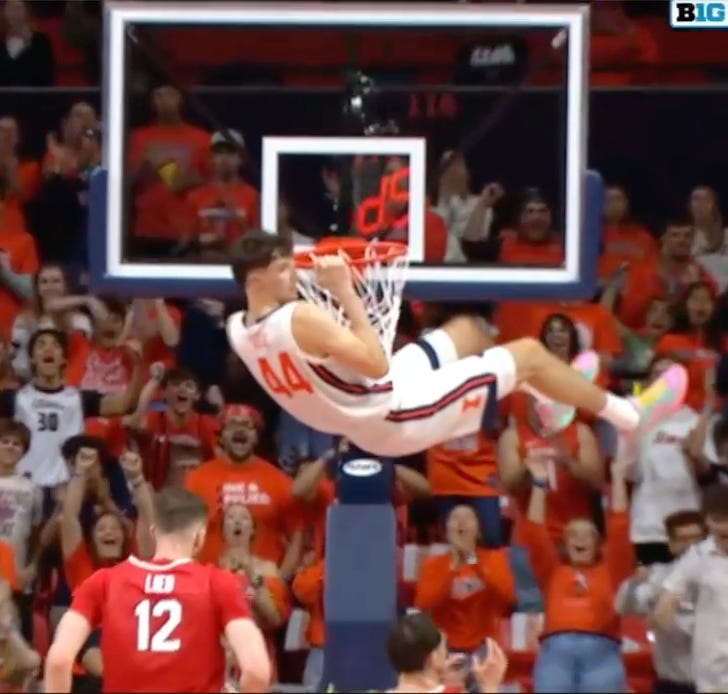
They even rolled out a full court trap which did result in a turnover and this Big Z dunk.
It’s encouraging to see Illinois show more variety on defense. The challenge now is determining what they can realistically use against stronger competition and how many coverages they can truly master. Coaches can always tweak and mix looks, but players have to process those changes in real time. It’s much easier to rely on one consistent coverage and play fast without thinking. The more adjustments you make possession to possession, the harder it becomes to execute cleanly. How much responsibility this group can handle is something we’ll learn over the course of the season as defensive coordinator Camryn Crocker works to modernize Illinois’ defense.
Here is the full game replay.